Augmented Reality In Education
Introduction to Augmented Reality in Education
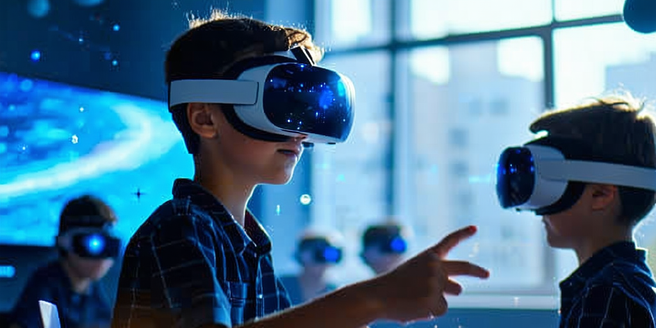
Augmented Reality (AR) is revolutionizing the educational landscape by embedding digital information within the real world. This fusion offers dynamic learning opportunities by creating immersive experiences that engage students more deeply than traditional methods. By overlaying 3D models and interactive content onto physical environments, AR transforms the classroom into a hub of innovation and discovery. Teachers can introduce complex subjects in a manner that is both accessible and captivating, catering to diverse learning styles. AR not only aids in visualizing abstract concepts but also promotes collaborative learning, as students interact with shared digital elements. As educational institutions increasingly explore AR technology, the potential for fostering curiosity and enhancing understanding continues to grow, paving the way for a more enriched learning experience.
How Augmented Reality Enhances Learning Experiences
Augmented Reality reshapes how students perceive and interact with their educational material. By introducing AR into the curriculum, educators can provide students with hands-on experiences that were previously unattainable in a traditional classroom setup. This technology bridges the gap between the theoretical and the practical, making learning more experiential and engaging. For example, science students can watch life-sized models of the solar system in action, while history students can virtually explore ancient civilizations. These interactive experiences not only elevate engagement levels but also aid in long-term retention of information. AR makes learning ‘real’ by placing students at the center of their own learning journey, allowing exploration beyond the pages of a textbook and fostering a deeper understanding of the subject matter.
Key Benefits of Using AR in Classroom Settings
Augmented Reality offers a multitude of benefits when integrated into classroom settings. It enhances understanding by providing visual and interactive representations of complex concepts, making them easier to grasp. AR stimulates student engagement and motivation by transforming mundane lessons into exciting experiences. It supports diverse learning styles and paces, enabling personalized education that caters to individual needs. Furthermore, AR helps develop critical thinking, problem-solving, and collaboration skills as students work together in interactive environments. Teachers can tailor content to class interests, encouraging curiosity and a more profound love for learning. The immersive nature of AR also allows for scenario-based learning, offering students practical insights and real-world applications of their studies. As education evolves, AR proves to be a powerful tool in fostering a dynamic and effective learning environment.
Challenges and Considerations in Implementing AR
Despite the promising prospects of AR in education, several challenges need to be addressed. One major hurdle is the cost of implementing AR technology, including hardware and software investments. Schools may face budget constraints that limit access to necessary devices or digital resources. Additionally, the technical expertise required to effectively integrate AR into the curriculum can be a concern, necessitating professional development for teachers. There’s also the issue of unequal access among students, potentially widening the digital divide. Privacy and security concerns over data management and student information must be carefully managed. Educators need to ensure that AR is pedagogically sound and aligns with learning objectives to avoid it becoming merely a novelty. By acknowledging these challenges, stakeholders can work collaboratively to develop effective strategies for successful AR integration.
Case Studies: Successful AR Applications in Schools
Several schools have set benchmarks in utilizing AR technology to enhance learning outcomes. For example, some institutions have adopted AR apps for virtual field trips, allowing students to explore distant locations and cultural landmarks from their classes. In STEM education, AR applications have enabled students to conduct virtual experiments, providing a safety net for trial and error without material constraints. Language classes have benefitted from AR by immersing students in simulated environments where they can practice conversational skills. In art and history, augmented artifacts offer interactive timelines and detailed explorations of artwork, engaging students creatively and critically. These successful case studies highlight AR’s potential in fostering educational innovations when thoughtfully implemented. By drawing from these examples, more schools can inspire and develop strategies for effective AR integration into their curriculum.
The Future of Augmented Reality in Educational Systems
The future of Augmented Reality in education is poised for further evolution and expansion. As technology advances, AR is anticipated to become more accessible and affordable, allowing widespread adoption across educational institutions. Emerging trends suggest an increase in content collaboration between educators and AR developers, resulting in more tailored and curriculum-aligned applications. The integration of artificial intelligence with AR is also expected to enhance personalized learning experiences by adapting content to individual student progress and learning preferences. As AR continues to evolve, educational systems are likely to see a shift towards more immersive and interactive learning environments. With ongoing research and investment, AR has the potential to transform education by breaking geographical, cultural, and economic barriers, enabling equitable and innovative learning opportunities for all students.