Augmented Reality In Retail
Understanding Augmented Reality Technology
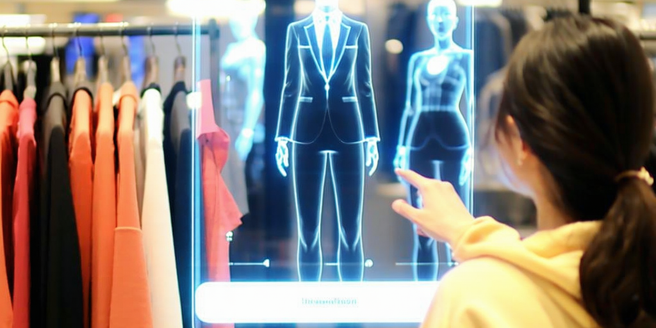
Augmented Reality (AR) technology blends digital content with the physical environment, enhancing real-world experiences. By overlaying digital information onto users’ view of the real world, AR can provide interactive and immersive experiences. It uses devices like smartphones, tablets, and AR glasses to project virtual objects or information into a real-time setting. AR’s appeal in retail lies in its ability to engage customers by offering personalized shopping experiences. From virtual try-ons to interactive displays, AR technology bridges the gap between online and in-store shopping, making it an essential component of modern retail strategies. With advancements in computer vision and sensor fusion, AR’s accuracy and user experience continue to improve, setting the stage for widespread adoption across various retail sectors.
How AR is Transforming the Shopping Experience
Augmented Reality (AR) revolutionizes the shopping experience by offering customers a new way to interact with products and brands. With AR, shoppers can visualize how products will look in their homes or on themselves before purchasing. This technology enables virtual try-ons of clothing, cosmetics, and eyewear, significantly reducing the uncertainty associated with online shopping. Retailers can harness AR to create engaging in-store experiences, such as interactive product catalogs or virtual stores. By integrating AR into mobile apps, retailers enhance customer engagement and increase confidence in buying decisions. As a result, AR has emerged as a powerful tool to bridge the gap between digital and physical retail, driving sales and enhancing customer satisfaction.
Benefits of Augmented Reality for Retailers
Augmented Reality (AR) offers numerous benefits for retailers seeking to enhance their customer experiences and streamline operations. First, AR provides a unique and immersive shopping experience, allowing customers to interact with products in a way that traditional shopping cannot match. It enhances in-store and online attractions, potentially increasing foot traffic and sales conversion rates. AR also aids in reducing return rates by enabling virtual try-ons and accurate product visualizations, giving customers a clearer expectation of their purchases. Additionally, AR can improve staff training by simulating retail environments and customer interactions, ensuring employees are well-prepared to assist customers. By implementing AR, retailers gain a competitive advantage, distinguishing themselves in a crowded market and fostering a stronger connection with their customers.
Challenges Faced in Implementing AR Solutions
Implementing Augmented Reality (AR) in retail presents several challenges that must be addressed for successful integration. One of the primary hurdles is the cost of developing and maintaining AR applications, which can be substantial, especially for smaller retailers. Additionally, there is a need for technological infrastructure, such as high-speed internet and compatible devices, which may not be accessible to all potential customers. Privacy concerns also arise, as AR applications often require access to user data and camera feeds, necessitating strict data management and security practices. Furthermore, user adoption can be inconsistent due to varying levels of tech-savviness among consumers. Retailers must invest in user education and seamless interface design to ensure a positive AR experience, addressing these challenges to capitalize on AR’s potential.
Future Trends of AR in the Retail Industry
The future of Augmented Reality (AR) in retail is set to be shaped by several emerging trends that promise to enhance the shopping experience further. Increased integration with Artificial Intelligence (AI) will enable AR systems to offer more personalized and intuitive interactions, tailoring recommendations and experiences to individual customers. The growth of wearable AR devices and smart glasses will support hands-free shopping experiences, allowing consumers to visualize products while on the go. As 5G networks expand, AR applications will benefit from faster data transmission and lower latency, leading to smoother and more responsive AR experiences. The merging of AR with virtual reality (VR) technologies may also create hybrid experiences, further blurring the lines between physical and digital retail. As these technologies mature, AR’s role in retail will likely become even more pervasive and transformative.