Digital Twins In Industrial Processes
Understanding Digital Twins: A Brief Overview
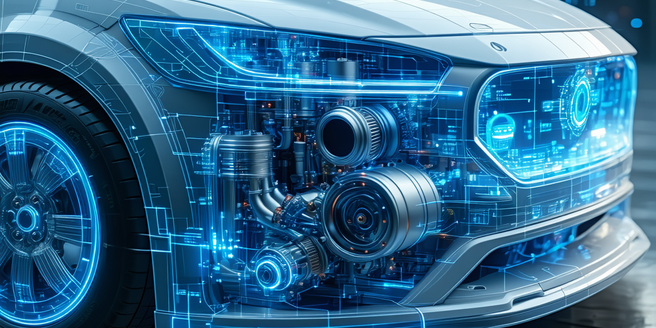
Digital twins are virtual replicas of physical entities, systems, or processes that allow for real-time monitoring and simulation. The concept emerged from engineering to allow for better design, monitoring, and optimization of complex systems. By creating a digital counterpart, real-world data is used to create simulations and predictive analyses. This enables organizations to understand system performance, predict failures, and optimize operations. Additionally, digital twins are helping bridge the gap between the digital and physical worlds by enabling more precise control over physical assets. They are increasingly being used in industries like aerospace, automotive, and manufacturing.
The Role of Digital Twins in Enhancing Efficiency
Digital twins play a crucial role in enhancing efficiency by enabling real-time data analysis and predictive modeling. They allow for continuous monitoring of equipment and processes, leading to improved operational efficiency and reduced downtime. With digital twins, industries can achieve better resource management, precise forecasting, and optimal decision-making. One of the key benefits is their ability to simulate scenarios that help in strategic planning. This innovative approach is rapidly transforming the landscape of industries worldwide. This technology helps in identifying potential issues before they become critical, thus enhancing the overall efficiency of industrial operations.
Applications of Digital Twins in Different Industries
Digital twins are transforming various industries by providing innovative solutions to complex challenges. In healthcare, they’re used for personalized medicine by simulating human organs. In manufacturing, they optimize production lines through precise simulations. Furthermore, they play a crucial role in urban planning by helping design smarter and more efficient cities. The automotive sector uses them for testing vehicle performance and safety. Notably, digital twins are pivotal in refining the design and testing of electric vehicles, promoting a sustainable future. In energy sectors, they manage and maintain infrastructure. These applications highlight the versatility of digital twins in streamlining operations, reducing costs, and enhancing product development across different fields.
Case Studies: Successful Implementations of Digital Twins
Many industries have successfully implemented digital twins to achieve significant advancements. For instance, an aerospace company used digital twins to optimize aircraft maintenance, reducing costs by 30%. Recently, a tech startup reported a breakthrough in predictive analytics using digital twins for early fault detection. A manufacturing firm improved production efficiency by 20% using digital twins to simulate workflow processes. In addition, urban planners are exploring digital twins to design smarter cities and improve infrastructure sustainability. In the healthcare sector, digital twins of human hearts provided insights that improved surgical outcomes. These cases showcase digital twins’ potential to revolutionize traditional practices and innovate industrial strategies.
Challenges and Considerations in Deploying Digital Twins
Implementing digital twins comes with challenges such as data security, integration complexities, and high initial costs. Data privacy is a major concern as digital twins rely on real-time data collection. As the technology rapidly evolves, organizations must stay updated on the latest advancements. It is essential for organizations to evaluate their current IT infrastructure to ensure compatibility with digital twin technology. Additionally, integrating digital twins with existing systems requires careful planning and resources. High costs of deployment might be prohibitive for some organizations. However, addressing these challenges through strategic planning and leveraging advanced cybersecurity measures can mitigate risks associated with deploying digital twins.
The Future of Digital Twins in Industrial Innovation
The future of digital twins in industrial innovation is promising. As technology evolves, so will the capabilities of digital twins, offering more detailed simulations and real-time data analysis. Their increased adoption will likely reshape how industries approach problem-solving and process optimization. They will become integral in the rise of smart cities, autonomous vehicles, and advanced manufacturing techniques. These digital representations of physical assets will enable industries to optimize operations and reduce costs. The ongoing advancements in AI and machine learning will further boost the functionality of digital twins. This evolution is set to drive industrial innovation, leading to more efficient, sustainable, and intelligent processes.